Why is transportation cost important?
Transportation costs are not simply "fares to get from A to B." They are systemic expenditures that include variable costs (e.g., fuel, labor), fixed costs (e.g., vehicle acquisition, information systems), joint costs (e.g., backhaul empty rides), and public costs (e.g., hub management sharing).It runs through the whole process of production, distribution, circulation and consumption, connects domestic and foreign markets, and directly affects the final price of products and the competitiveness of enterprises.
?
Affect enterprise operations and profits
Transportation costs are an important part of business costs. Take logistics and transportation enterprises as an example. Transportation services involve many costs such as labor, fuel, and maintenance. If enterprises can reduce transportation costs, their profit margins will be much larger.For example, in port transportation, electric heavy trucks compared with traditional fuel heavy trucks, the use cost is basically halved, long-term operation can save a lot of money every year, and maintenance costs are lower.
?
About product price and the market competition
Transportation costs directly affect the final selling price of the product. If the transportation cost is high, the product price will also rise, and its competitiveness in the market will be weakened.If the transportation cost is reduced and the product price is more advantageous, it can attract more customers and expand the market demand.
?
It is of great significance to economic development
From a macro perspective, transportation costs have a significant impact on the growth of the national economy.Logistics is a bridge connecting production and consumption. Reducing logistics costs can reduce the burden of enterprises, improve product competitiveness and stimulate economic growth.The state can promote the coordinated development of regional economy by deepening the reform of institutions and mechanisms and promoting the reduction of transportation costs.
?
Improve the business environment
Lower transport costs help improve the business environment and attract more outside investment.For example, by improving transportation infrastructure and reducing transportation costs, some regions can attract more enterprises to settle in and inject new impetus into economic development.
?
?
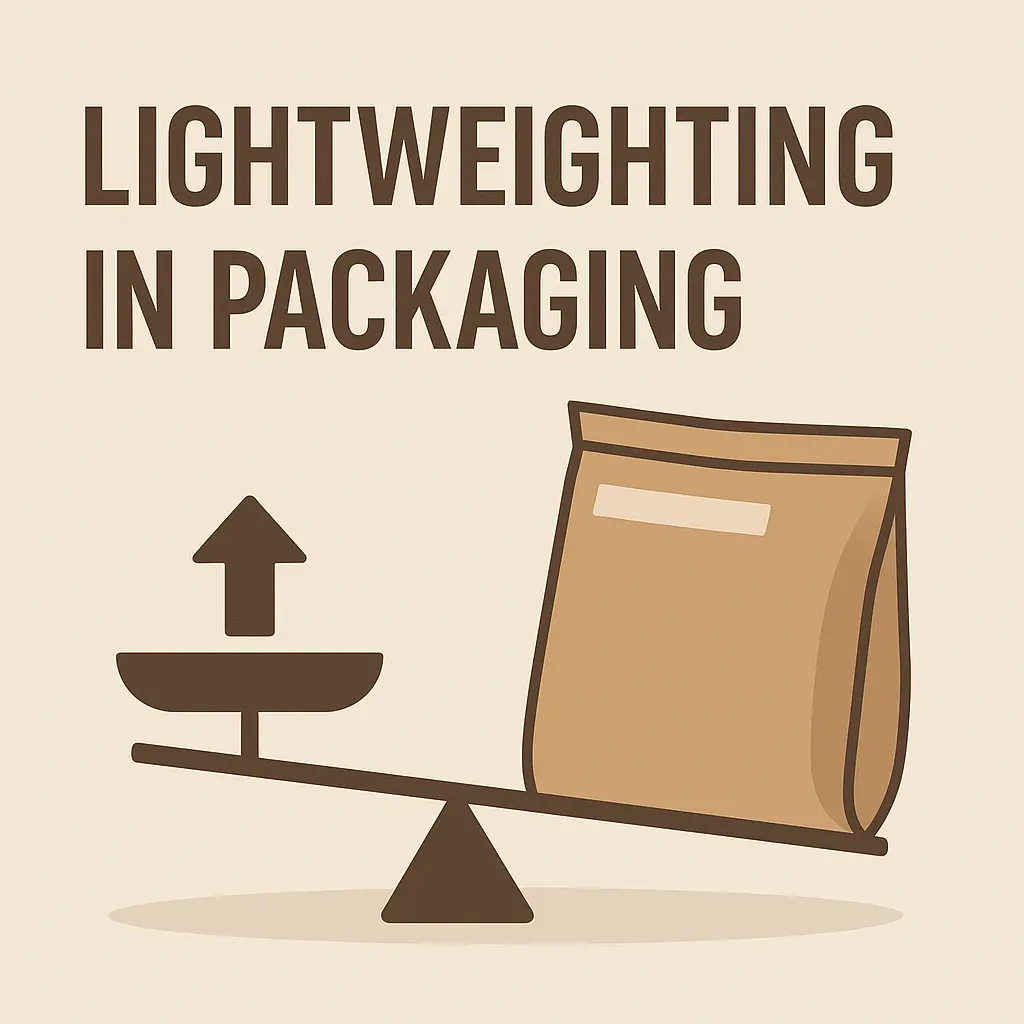
What is lightweight packaging?
In simple terms, lightweight packaging refers to the premise of ensuring the basic functions of packaging, through optimizing material selection, improving packaging structure design and adopting advanced manufacturing technology and other means to minimize the weight of packaging products, so as to achieve energy conservation and emission reduction, improve transportation efficiency, reduce logistics costs and promote environmental protection and other multiple goals.
?
It originates from people's deep thinking about resource utilization efficiency and environmental protection.With the increase of the global population and frequent economic activities, the use of packaging materials has risen sharply, which has caused great pressure on the environment, so lightweight packaging comes into being.It is not only an important development direction in the field of packaging engineering, but also an important measure to promote sustainable development and green manufacturing. In daily life, the plastic packaging bottles you see in supermarkets that are thinner but strong enough, and the cardboard boxes with honeycomb structure designs, etc., may all be manifestations of lightweight packaging. Many people may misunderstand that lightweight packaging is simply about reducing packaging materials. In fact, it emphasizes optimization on the basis of ensuring packaging performance.
?
Advantages of lightweight packaging
Economical little expert
- Reduced transportation costs: Lightweight packaging reduces the overall weight of the product, which reduces fuel consumption and freight costs when shipped.For example, after the lightweight design of the steel-side box, the vehicle can increase the payload of a single transportation and reduce the unit transportation cost of goods. After an international logistics company adopted it, the unit transportation cost was reduced by 6.5%.
?
- Material cost savings: Reduce the use of packaging materials and reduce procurement costs by optimizing design and material selection.After the plastic packaging is lightweight, the resin material used in the plasticization molding link is reduced, saving resources and costs.
?
Environmental protection pioneer and model
- Reduce resource consumption: Reduce the use of packaging materials, reduce energy consumption and environmental pollution of resource extraction and processing. For instance, the lightweight design of steel edge boxes can reduce the usage of materials such as steel. The automotive industry adopts lightweight packaging materials to lower the consumption of metal resources.
?
- Reduce carbon emissions: From the production of raw materials to the whole life cycle of transportation and use, lightweight packaging can reduce energy consumption, reduce greenhouse gas emissions such as carbon dioxide, and help enterprises achieve carbon emission reduction goals.
?
- Promote recycling: Recyclable and degradable materials are often used, which can be recycled and reused or degraded naturally after being discarded to reduce the negative impact on the environment and promote the development of circular economy.
?
Experience Upgrade expert
- Improve user experience: The design is simple and beautiful, easy to open, easy to carry and use, increase the convenience of the product, and improve the purchase intention of consumers. Lightweight packaging for fast-moving consumer goods such as food and beverages makes it more convenient for consumers to use and carry.
?
- Adapt to diverse needs: Can flexibly adapt to the needs of different products, through different materials and designs to meet specific market needs, so that enterprises can better respond to market changes and enhance competitiveness.
?
A powerful tool for market competition
- Enhance product competitiveness: Consumers pay attention to environmental protection products. Lightweight packaging can enhance brand image, enhance market competitiveness, and attract more consumers with strong environmental awareness.
?
- Promote industry innovation: To achieve lightweight technology innovation and material research and development, can promote the application of new materials and new processes, and promote the technological progress and innovative development of the packaging industry.
?
?
How to use lightweight packaging solutions to save transportation costs?
Optimize packaging materials
Choose packaging materials with light quality but sufficient strength, such as light cartons, plastic films, bio-based PLA,
honeycomb cardboard, bagbage-molded trays, etc. instead of heavy packaging, so as to reduce the weight of packaging and reduce transportation costs under the premise of ensuring the safety of commodity transportation.For example, the use of honeycomb cardboard packaging can reduce the weight of a single package by more than 50%, so as to avoid the loss of heavy billing by volume.
?
Optimize packaging design
- Standardized packaging: Packaging with uniform specifications is designed to facilitate stacking and storage in logistics transportation, improve space utilization, reduce spare space in the transportation process, and reduce transportation costs.At the same time, standardized packaging also helps to improve packaging efficiency and reduce packaging labor costs.
?
- Structural optimization: Through rational structural design, reduce the use of materials.For example, the use of folding design, modular and foldable design, structural bionics principles (such as honeycomb structure or imitation bamboo joint structure), etc., can save space and materials during transportation, and achieve lightweight while maintaining strength.
?
- AI 3D packing algorithm: According to the characteristics of the cargo compartment of the model, the space occupied by the cargo can be compressed, so that the volume weight of the light cargo is close to the actual weight, and the extra freight caused by the imaginary weight is avoided.
?
Plan transportation reasonably
- Integrate orders: Integrate orders sent to the same area or similar areas, concentrate delivery, increase the batch of goods, thereby improving transportation efficiency and reducing unit transportation costs.By establishing an order pool, it can be reasonably matched according to the destination and delivery time to realize joint load transportation.
?
- Choose direct route: Avoid transit and multiple loading and unloading as far as possible, choose a direct route to the destination, reduce the loss of goods in the process of transportation and delay risk, but also reduce the additional costs caused by transit.
?
Accurately predict demand
Through data analysis, market research and other means, accurately predict market demand, reasonably control inventory levels, and avoid inventory overstock and stockouts.Reducing inventory backlog can reduce warehousing costs and capital occupation costs, while avoiding stock-outs can avoid high cost logistics transportation caused by emergency replenishment.
?
?
Transportation cost is an important part of enterprise logistics expenditure, especially in international small packages, bulk goods or high frequency distribution. With the tightening of environmental protection regulations and the increasing concern of consumers for sustainable development, lightweight packaging has become one of the key paths to reduce costs and increase efficiency.It not only reduces resource consumption, but also directly reduces the weight and volume of the unit of goods, thus affecting the freight billing basis (such as charging by volume weight or real weight).






 Guangdong Shiteng Wisdom Technology Co., Ltd.