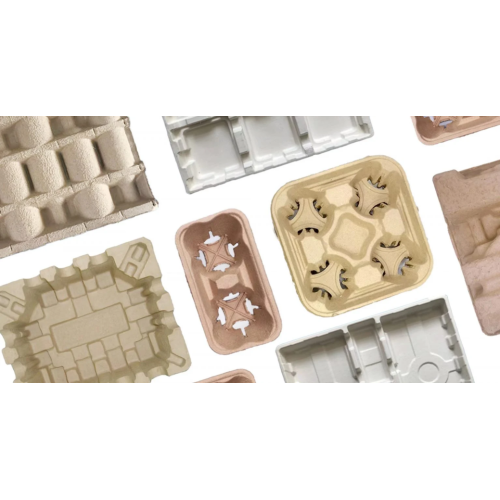
By 2026, as the global attention to plastic pollution treatment and recycling economy deepened, "compostable packaging" and "
recycled packaging" has become the two core direction in the field of sustainable packaging. Although both aim to
reduce environmental burden, there are significant differences in their nature, treatment paths and application scenarios.?
?
?
I. What are compostable packaging and recyclable packaging?
Compostable packaging
Definition: Compostable packaging is refers to under certain conditions, such as industrial composting compost or family environment), by microbial action can be completely decomposed into carbon dioxide and water, inorganic salt and new material of packaging materials.
The process needs to meet certain temperature, humidity, oxygen and microbial conditions.
Features:
The material sources are mostly biological, such as starch, cellulose, PLA (polylactic acid), etc. The decomposed products are harmless to the environment and can be used as organic fertilizer for soil improvement.?
?
Must be in suitable composting facilities to achieve effective degradation; If it enters the natural environment or landfill site, the degradation efficiency may be very low or no degradation.?
?
"Compostable" ≠ "biodegradable"
All compostable materials are biodegradable materials, but not all nominal "biodegradable material can be quickly and completely in the composting system decomposition and satisfies the requirement of toxicity.
?
Recyclable packaging?
Definition:
Recyclable packaging refers to a kind of packaging materials that can be reprocessed through physical or chemical methods after use, converted into recycled raw materials and used for manufacturing new products, such as PET bottles, HDPE containers, cardboard, etc.
Features:
Most are based on traditional plastic or fiber materials and emphasize closed-loop recycling.?
?
It is necessary to rely on a complete garbage classification and recycling system. The regeneration process requires energy consumption, but the overall carbon footprint is lower than that of raw material production.
?
?
II. Comparison of Core Decision-making Dimensions?
In the current (2026) to promote the development of green low carbon transformation and circular economy background, enterprise in selecting packaging materials, "compostable packaging" and "recycled packaging" are sustainable path, but significant difference application scenarios and environmental benefits.
?
Terminal treatment conditions for waste
Target market has perfect biological waste classified collection system and industrial composting facilities choice under the condition of compostable packaging.
?
The local has a mature plastic recycling sorting and recycling processing industry chain, to ensure that waste packaging can enter the formal recycling process, it is more appropriate to choose recyclable packaging.
?
Material performance requirements
Compostable packaging needs short-term degradation, and long-term stability is not high. It is suitable for closed-loop systems with a clear compost disposal path.?
?
Recycled packaging of physical strength, high barrier property, heat sealing, which can realize material recycling for many times.
?
Carbon footprint and resource efficiency
Compostable packaging raw material from renewable biomass (such as PLA from corn starch), can reduce the dependence on fossil resources; However, production energy consumption may be high.?
?
The use of recyclable packaging significantly reduce the native plastic production demand and the energy consumption of regeneration process is usually lower than new material production, the whole life cycle of lower carbon emissions.?
?
Cost control
Compostable packaging using biological base materials (such as PBAT, PLA) price is generally higher than traditional plastic, overall cost on the high side.?
?
The cost of recycled plastics (such as rLDPE and rPP) used in recyclable packaging is more advantageous after large-scale application, especially suitable for mass use of express and e-commerce packaging.?
?
Product usage scenarios
Compostable packaging is easy to be contaminated by food residues (such as take-out boxes, coffee capsules, fresh trays) and difficult to clean and recycle; Or belong to a one-time high frequency discarded products.?
?
The recyclable packaging is relatively clean and easy for consumers to put into the recyclable bucket (such as express bags, daily chemical soft bags, food self-reliance bags).
?
?
III. Future Trends and Suggested Strategies
Avoid the "Fake Environmentalism" Trap
Do not blindly promote "degradable = environmental protection" : without supporting composting facilities, compostable packaging may remain in the natural environment for a long time, and even produce microplastics.
?
Recycling packaging also needs to be "Design for Recycling" : avoid multi-layer composite, aluminum plating, dark ink and other designs that interfere with recycling.?
?
Give priority to the development of high-volume PCR material packaging
Using the Post-Consumer Recycled (PCR) packaging such as PCR-LDPE bag can not only reduce the dependence on oil, but also realize the closed-loop circulation, and the technology is mature and the cost can be controlled.?
?
Make localized decisions in combination with regional infrastructure
In areas with perfect waste classification and strong composting capacity (such as Germany, Northern Europe and some first-tier cities in China), composting packaging is more feasible.
?
In areas with a sound recycling system but insufficient composting facilities, priority should be given to the promotion of recyclable + high-recycling packaging.?
?
Transparent labels guide consumers on proper disposal
Whichever type is chosen, it should be clearly marked with:
Material composition (such as "PLA+PBAT" or "100% rLDPE")
Disposal method ("Please put in the green food waste bin" or "Please put in the blue recyclable bin")
Certification information (such as compliance with EN 13432 or containing PCR percentage)?
?
The best strategy is not "pick one" but "fit on demand"?
Compostable packaging is an ideal choice in a closed-loop system with organized collection and delivery and professional composting support.
?
Under mature recycling system, recyclable packaging is more resource efficient and economical.?
?
?
The trend in the future will be towards a "recyclable first, compostable" integrated governance model, while driving material innovation (e.g. chemical recycling, bio-based recyclable plastics) to achieve a truly sustainable packaging transformation.






 Guangdong Shiteng Wisdom Technology Co., Ltd.